



Introduction
Dome structure buildings are increasingly becoming a highly sought-after part of modern architecture due to their superior strength, stability and aesthetics. From commercial buildings to residences to temporary event spaces, domed structures are becoming increasingly important in the architectural world due to their efficient use of space, energy efficiency and durability. In this article, we will explore the design principles, main types, material selection and their wide range of applications of domed structures from several perspectives.
What Is a Dome Structure Building
Dome structure buildings originated from ancient designs thousands of years ago, but with the continuous advancement of material technology and structural engineering, their scope of application and design concepts have undergone significant changes. The basic design principle of domed buildings is to utilize curved shapes in geometry to spread out pressures and loads, which allows the building to carry more weight without the need for excessive support columns or walls. The Geodesic Dome, in particular, ensures the stability and safety of the building through the grid design of triangular cells. Advantages:
- Space efficiency: The dome structure has no internal columns, maximizing the use of interior space and providing an open environment for use.
- Energy efficient performance: The dome shape effectively reduces the external surface area, improving temperature control efficiency and reducing energy consumption.
- Seismic and Wind Resistance: The geometry and continuity of the dome makes it a good performer in the face of wind and earthquakes, making it suitable for high-risk areas.
- Aesthetics: The unique shape of the dome is often used in architectural designs that require a high level of aesthetics.
Main Types of Dome Structure Buildings
Dome structures can be categorized into several types based on design methods, materials used, and construction techniques:
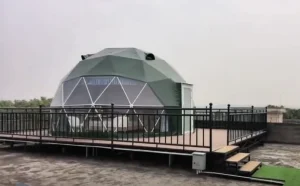
Geodesic Dome
Promoted by the renowned architect Buckminster Fuller, geodesic domes utilize a triangular lattice design to uniformly distribute pressure. This structure is both strong and lightweight, making it ideal for large venues and greenhouses that require expansive space.
- Applications: Large exhibition halls, stadiums, greenhouses, etc.
Monolithic Dome
Monolithic domes are typically constructed from a single continuous piece of concrete or other strong materials. They exhibit high disaster resistance and are commonly used for residential units and storage facilities.
- Applications: Residential buildings or emergency shelters in areas prone to natural disasters.
Inflatable Dome
Inflatable domes maintain structural stability through air pressure and are suitable for temporary events or exhibition venues. They are easy to install and offer flexibility.
- Applications: Temporary venues for sports events, exhibitions, or cultural activities.
Steel Dome
Steel domes are constructed from durable steel and are widely used in modern large-scale buildings due to their excellent durability and adaptability.
- Applications: Stadiums, concert halls, large commercial facilities, etc.
Material Selection for Dome Buildings
Selecting the right materials is crucial for dome structures, as appropriate materials can significantly enhance a building’s strength and durability. Common materials include:
- Concrete:Ideal for monolithic domes, offering high strength and durability.
- Steel:Steel domes perform exceptionally well in large-span buildings and have high earthquake resistance.
- ETFE Membrane:Lightweight and transparent, ETFE is commonly used in greenhouses and exhibition halls to improve energy efficiency.
- PVC/PVDF Membrane:Suitable for inflatable domes and some temporary structures, these membranes offer high flexibility and pressure resistance.
Application Scenarios of Dome Structures
Due to their unique functionality and aesthetic appeal, dome structures have been widely utilized in various building projects:
Greenhouses and Agricultural Facilities
The open space and natural lighting of dome structures make them ideal for greenhouse construction. A prime example is the Eden Project in the UK, which employs ETFE membrane materials to achieve excellent lighting and temperature control.
Large-Scale Exhibition Halls and Event Venues
Dome structures are frequently used for large-scale events and exhibition venues. The Montreal Biosphere, an iconic building that now serves as an environmental museum, showcases the versatility of dome architecture.
Temporary Buildings and Emergency Facilities
Inflatable domes are well-suited for temporary events and emergency buildings. Their ease of installation and low cost have made them the preferred choice for many large-scale events.
Future Trends in Domed Structures
As technology advances, domed buildings are evolving toward greater efficiency and sustainability:
- Application of Smart Materials: Future dome structures will likely incorporate smart materials that can adjust light transmission or reflectivity based on environmental changes, further enhancing energy savings and comfort.
- Eco-Design: Dome structures are expected to play an increasingly important role in green building initiatives due to their efficient use of materials and energy-saving properties.
- Modular and Demountable Design: With advancements in modular building technology, dome structures will become more flexible and adaptable to a wider range of application scenarios.
Why Choose a Domed Building
Dome buildings are gaining popularity in modern design due to their significant advantages in space utilization, energy efficiency, durability, and disaster resistance:
- Maximize Space Utilization: The overall design of a dome building eliminates the need for internal columns, allowing for a more open and flexible space. Data indicates that the space utilization efficiency of a domed structure is over 30% higher compared to traditional buildings on the same footprint, making it ideal for large-scale event venues.
- Higher Energy Efficiency: Dome structures effectively reduce heating and cooling needs by 20-30%. For instance, greenhouse projects in Canada have reported approximately 25% savings in energy costs after adopting a dome design.
- High Durability and Resilience: Dome buildings can withstand wind speeds about 1.5 times greater than conventional structures, and many dome homes suffer minimal damage during hurricanes. Additionally, their seismic capacity has been shown to increase by approximately 30-40%.
- Adaptability and Versatility:Dome buildings are suitable for a wide range of applications, from eco-homes to exhibition halls, and can be quickly adapted to different environments and functional needs. For example, the domed structure of the Eden Project creates an ideal growing environment for various plants.
How to Choose the Right Type of Dome Building
Selecting the appropriate type of dome building involves considering several factors, including intended use, budget, environmental conditions, and material choices. Here are some key points to guide you in making an informed decision:
Usage
1. Residential Use
- Monolithic Dome: Highly resistant to disasters, making it ideal for areas prone to natural hazards.
- Geodesic Dome: Suitable for general residential needs due to its lightweight and sturdy design.
2. Commercial Use
- Steel Dome: The best choice for large venues, exhibition halls, or sports facilities, thanks to its durability and adaptability commonly found in modern large buildings.
3. Temporary Use
- Inflatable Dome: The optimal choice for temporary events or exhibition venues, as it is easy to install and flexible.
Budget
- Cost-Effective Options: Geodesic Domes and Inflatable Domes are relatively low-cost options, suitable for projects with budget constraints.
- Long-Term Investment: Monolithic concrete domes may have a higher upfront cost, but their durability and resilience make them ideal for long-term use.
Environmental Conditions
- High Wind or Earthquake Areas: Choose structures with high seismic capacity, such as Steel Domes or Monolithic Domes, for better resilience.
- Greenhouses or Agricultural Facilities: Lightweight and transparent ETFE membrane materials are preferred for optimal light transmission and energy efficiency.
Material Selection
- Concrete: Ideal for Monolithic Domes due to its high strength and durability.
- Steel: Superior for Steel Domes, especially in large-span buildings with strong seismic capacity.
- ETFE Membrane: Lightweight and offers excellent light transmission, commonly used in greenhouses and exhibition halls to improve energy efficiency.
- PVC/PVDF Membrane: Suitable for Inflatable Domes and some temporary structures, known for its high flexibility and pressure resistance.
Maintenance and Service Life
- Maintenance Needs: Varies by material; for instance, steel domes may require regular inspections for rust prevention, while fabric domes might need routine cleaning.
- Service Life: Monolithic domes typically have a longer lifespan, making them suitable for long-term use scenarios.
Summary of Applicable Scenarios
Here’s a quick overview of suitable applications for various dome types:
- Geodesic Dome: Large venues, greenhouses, residences.
- Monolithic Dome: Residential units, storage facilities, emergency shelters.
- Inflatable Dome: Temporary events, exhibition spaces, cultural venues.
- Steel Dome: Stadiums, concert halls, large commercial facilities.
It’s crucial to choose the right type of dome construction based on your specific needs and conditions.
FAQ about Dome Sturcture
Q1: How much do domed buildings cost?
The cost of a dome building varies based on materials, size, and design. Generally, geodesic domes and inflatable domes are less expensive, while monolithic concrete domes tend to be more costly.
Q2: Can domed buildings be used in residential applications?
Yes, many residential projects utilize domed structures to maximize space and energy efficiency. They are especially popular in disaster-prone areas due to their resilience.
Q3: Are domed buildings difficult to maintain?
Maintenance difficulty depends on the materials used and environmental conditions. For instance, a steel dome may require regular inspections to prevent rust, whereas a fabric dome might need routine cleaning.
Conclusion
As an innovative architectural form, dome structures have gained widespread popularity around the world due to their unique design concepts and versatility. As building technology and materials continue to advance, the future of dome structures will be even more flexible and adaptable to various environments and changing needs.
If you are interested in exploring the application of domed structures in your next project, please feel free to contact us. Our team is ready to provide professional consultation and customized design solutions to help you realize your dreams. Let’s work together to create a better, environmentally friendly architectural future!

 English
 Spanish
 Arabic


