


Introduction
When choosing a storage space, companies are often faced with the choice of “building a storage tent or investing in a steel warehouse”. These two structures have similarities in function, but there are significant differences in terms of structural composition, construction cost, construction period, relocatability, approval process, and post maintenance.
Comparison of Structural Principles and Materials

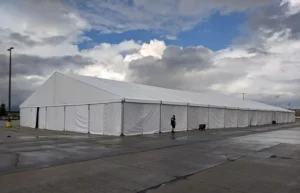
Storage Tent Structure
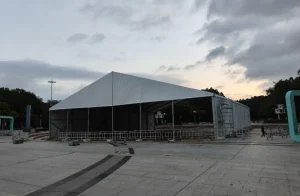
- The frame is usually constructed with aluminum alloy or hot-dip galvanized steel, covered with high-strength PVC tarpaulin on the outside, and fixed to the ground by expansion bolts, ground spikes, and heavy ballast.
- Usually the foundation is not closed, so the structure is lighter and belongs to “assembled building”.

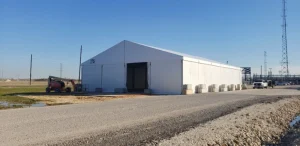
Steel Warehouse Structure
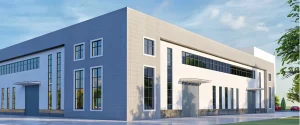
- The main body is H-type steel beam and column structure, the wall and roof are made of heavy materials such as color steel plate, rock wool sandwich panel, glass curtain wall, etc.
- The foundation is reinforced concrete floor beam.
- It is a permanent building with heavy overall weight and extremely high compression resistance.
Construction Cycle and Installation Mode
After understanding the core structure, the next important factor is how quickly and easily these two storage solutions can be built. Time, equipment, and labor can greatly affect project planning and operational readiness—especially for businesses that need rapid deployment.
Project Comparison
Feature | Storage Tent | Steel Structure Warehouse |
Construction Cycle | Usually 3 days – 2 weeks | Usually 30 – 90 days |
Required Equipment | Manual + light lifting equipment | Crane, steel welding equipment |
Installation Mode | Factory prefabrication, on-site assembly | On-site welding + splicing and installation |
Whether it can be dismantled | It can be dismantled and relocated many times | Once it is built, non-movable |
👉 Summary: If you are looking for quick operational, temporary, or demountable storage, storage tents are significantly more efficient and flexible.
Comparison of Cost Components
One of the most critical aspects in any infrastructure decision is cost. Beyond the initial price tag, long-term operational costs, foundation requirements, and accessory systems can vary significantly. The table below provides a clear side-by-side storage tent vs. steel warehouse cost comparison.
Cost Item | Storage Tent | Steel Warehouse |
Material Costs | $20 – $50 / m² | $80 – $120 / m² |
Foundations | Optional, Simple or Ballasted | Hardened foundations necessary and costly |
Installation Costs | $5 – $10 / m² | $30 – $60 / m² |
Accessory System | Medium configuration is sufficient | More electrical, plumbing, HVAC required |
Average Total Cost | $25 – $80 / m² | $120 – $200+ / m² |
💡 Based on 1,000 m² area:
- Storage tent cost approx. – $60,000
- Steel structure warehouse cost about $120,000 – $200,000+
Useful Life and Maintenance Differences
Longevity and upkeep are key considerations for storage solutions. A structure that’s easy to maintain and durable can reduce total ownership costs and operational disruption. Let’s explore how storage tents and steel warehouses perform over time.
Dimension Comparison
Feature | Storage Tent | Steel Warehouse |
Useful Life | Canvas 5-10 years, structure 10-15 years | Average 20-30 years |
Maintenance Frequency | Canvas needs regular inspection and replacement | Structure is solid, long maintenance cycle |
Fire Rating | Optional flame retardant PVC fabric | Metal structure is inherently fire resistant |
Wind Resistance | Snow resistant, customized design available | Reinforced structure, default high wind and snow resistance |
🔧 Note: Storage tents have a slightly shorter lifespan, but the materials are replaceable and maintenance is more flexible. Although the steel structure has a long service life, the initial investment and later maintenance costs are high.
Comparison Summary of Applicable Scenarios
Depending on your business model, project duration, and site conditions, one option may suit your needs better than the other. Below is a summary of storage tent vs. steel warehouse which solution works best for specific scenarios.
Applicable Needs | More Suitable for Storage Tents | More Suitable for Steel Structure Warehouses |
Temporary Storage | ✅ | ❌ |
Leased Land | ✅ | ✅ |
Fast Erection | ✅ | ❌ |
Fixed Factory | ❌ | ✅ |
High-Frequency Use | ✅ (Replaceable parts) | ✅ (Long-term stability) |
Areas with Strict City Approvals | ✅ (Most can be exempted from approval) | ❌ (Required to submit construction report) |
Construction Budget is Limited | ✅ | ❌ |
High Fire-Resistant Standards | ❌ (Required to be specially customized) | ✅ |
Conclusion Recommendations
Type of Business | Recommended Structure |
Site turnaround, building constructor | Storage tents |
Farms, warehouses for temporary expansion | Storage tents |
Temporary storage, e-commerce peak season replenishment | Storage tents |
Long-term industrial warehousing, high-value commodities | Steel Structure Warehouses |
Requires building approval or high-temperature environment | Steel Structure Warehouses |
Environmental Impact and Sustainability Comparison
With the rise of ESG concepts and increased regulation of carbon emissions in various countries, the environmental impact of building structures is receiving increasing attention.
Dimensions Comparison
Feature | Storage Tent | Steel Warehouse |
Material Recyclability | Framing metal fully recyclable, tarpaulin partially reusable | Steel recyclable, but sandwich panels have low recycling value |
Carbon Performance | Low carbon emissions from manufacturing and transportation | High carbon emissions from steel production and construction |
Reusability | ✅ Multiple relocations and installations to adapt to different sites | ❌ Fixed structure, one-time investment |
Difficulty of Demolition and Disposal | Simple, almost no construction waste | Needs to be broken up; concrete foundations generate large amounts of waste |
CONCLUSION: Storage tents are more advantageous if the project has higher sustainability requirements, such as temporary sites, high turnover needs, or green certification considerations.
Policy Approvals and Legal Risks
Site selection and approval are prerequisites for the realization of a storage facility. Steel structure warehouses often face a more complicated construction process due to their “permanent” attribute.
Comparison Items
Feature | Storage Tents | Steel Warehouses |
Whether Construction Permits are Required | Most areas can exempt or simplify the procedures | Construction permits and planning permission are required |
Urban Planning Compatibility | Temporary facilities, more widely applicable | Land use regulations and fire safety regulations need to be complied with |
Risk of Legal Compliance | Lower, with high policy flexibility | Higher, with multi-party review and longer cycle time |
Complications of Site Approval | Generally, no red line approval is needed | Mostly, land use approval and mapping filing are required; most need land use approval and mapping record |
💡 Suggestion: If the site is leased land or in an area where urban construction control is more stringent, prioritize storage tents to effectively reduce the risk of non-compliance.
Practical Application Case Analysis
To better illustrate the storage tent vs. steel warehouse differences, we’ve included two practical case studies from international clients who faced typical storage challenges and chose different solutions based on their needs.
Case 1: Temporary Warehouse Expansion – E-commerce Customer Project (California, USA)
- Customer Requirement: To cope with the sudden increase of inventory in the peak season, we plan to quickly set up a 1000 m² temporary warehouse on our own land.
- Solution: Adopted a storage tent, configured with a rollable door and LED lighting system, installed and put into use in 3 days.
- Feedback: This greatly shortened the construction cycle, saving more than 65% of the cost, while avoiding the complicated approval process.
Case 2: Industrial Warehouse Construction – Manufacturing Client (Hamburg, Germany)
- Customer Requirements: Long-term storage for equipment and finished products, requiring high structural strength and a constant temperature system.
- Solution: Built a steel structure warehouse, equipped with a rock wool insulation system and fire sprinkler equipment.
- Feedback: The construction period was about 60 days. After it was put into use, it saved rental costs and met the long-term use demand for 20 years.
Future Trends and Purchasing Suggestions
With the modularization and lightweight development of construction methods, storage tents are no longer just synonymous with “temporary warehouses.” High-end tent products are gradually equipped with wind and snow resistance, heat insulation and heat preservation, and intelligent management capabilities. The possibility of replacing traditional buildings in many industries is increasing.
Suggestions for Selection:
- Short-term projects (<5 years): Give priority to storage tents.
- Need to quickly land or in areas with difficult approvals: Storage tents are more strategic and flexible.
- Long-term warehousing or equipment workshop use: Steel warehouses are more suitable.
- If budget permits: Consider using a “tent + steel structure” hybrid program to enhance comprehensive benefits.
Conclusion
Are you still hesitant about which storage structure to choose? We offer one-on-one scenario assessment and customized design services. Whether it’s for short-term use, temporary storage, or a large-scale permanent project, we can match you with the most suitable combination of products.
📞 Feel free to contact Gaxtent‘s team of consultants today and let professionalism save you time and money.


 English
 Spanish
 Arabic


