


Design and Application of Rigid Beam Trusses in Construction

Table of Contents
Introduction
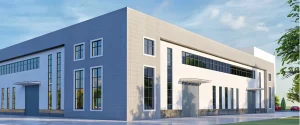
Rigid beam trusses are highly flexible and customizable structural systems, typically designed using I-beam trusses. These trusses can span up to 300 feet in width, making them ideal for large structures such as airplane hangars, seed cleaning facilities, indoor recreation centers, and buildings that require a gantry crane. Rigid beam trusses provide a sturdy and stable framework for these large-span buildings, ensuring safety and stability under heavy loads.
This article explores the structural characteristics, design principles, construction process, and applications of rigid beam trusses. By understanding these key elements, readers will gain insight into how this structure type addresses modern demands for large spans, high load-bearing capacity, and customizability.
Basic Concepts of Rigid Beam Trusses
A truss is a structural element made of multiple straight rods connected by joints, designed to support external loads and efficiently transfer them to support points. Trusses are often used in large-span buildings to provide high strength while reducing material usage.
Rigid beams are characterized by their strong resistance to bending, shear, and minimal deformation under load, making them suitable for buildings that require high strength and stiffness. The joints are typically welded or bolted to create rigid connections. In contrast, non-rigid beams offer more flexibility and are suitable for lighter applications with less stringent load requirements.
Rigid beam trusses are composed of main beams, secondary beams, and support rods, all connected through rigid joints. These connections effectively transmit bending moments and shear forces, ensuring the truss’s stability under heavy loads.
Design Principles of Rigid Beam Trusses
The design of rigid beam trusses begins with mechanical analysis to determine stress and strain distributions across each member. Load transfer and distribution are key design considerations, as trusses must efficiently handle vertical loads (self-weight and live loads) as well as environmental loads like wind and snow. Proper joint connections ensure effective load transfer to support points and across the truss.
Material selection is crucial for achieving the desired performance. Common materials used in trusses include steel, aluminum, and concrete. Steel, with its high strength and durability, is particularly suitable for large-span trusses. For lighter designs, aluminum alloys may be used. Material properties such as strength, stiffness, and corrosion resistance must be carefully considered based on the intended application and environment.
Design standards and building codes govern the design of rigid beam trusses to ensure safety. These standards address load requirements, material specifications, and structural performance. Common codes include the Building Structure Load Code, Steel Structure Design Code, and Seismic Design Code.
Types and Applications of Rigid Beam Trusses
There are several common types of rigid beam trusses, each suitable for different applications:
- Simply Supported Trusses: These trusses are supported at both ends and are typically used in medium-span buildings, such as low-rise factories and warehouses.
- Continuous Trusses: Continuous trusses have joints that are connected across multiple spans, offering better resistance to bending and shear. These are ideal for larger, heavier buildings.
- Trapezoidal Trusses: With varying heights along their length, these trusses are used for buildings with height variations, such as sports arenas or theaters.
- Triangular Trusses: The most common type, triangular trusses offer simplicity and stability. They are widely used in large-span buildings, including airports and sports venues.
Rigid beam trusses are widely applied in various construction projects, including industrial facilities, commercial buildings, and infrastructure. For example, in airplane hangars, where large spans are required, rigid beam trusses provide the necessary structural support while maximizing usable space. In sports venues and recreational facilities, trusses offer open, column-free spaces, making them ideal for arenas, swimming pools, and exhibition halls.
In bridges, rigid beam trusses provide long-span solutions that effectively distribute loads and resist bending. These trusses are commonly used in highway bridges and railway bridges, where large, open spans are necessary to cross rivers or other obstacles.
Construction and Installation of Rigid Beam Trusses
The construction process of rigid beam trusses begins with preparing detailed design drawings and construction plans. These documents specify truss dimensions, material requirements, load calculations, and joint design. Safety measures and a project timeline are also integral to the planning phase.
Truss components are typically fabricated in a factory before being assembled on-site. The installation process involves connecting these components, ensuring precise alignment to maintain the truss’s stability. The installation sequence starts from one end or the middle, progressively adding sections and securing them as the structure grows.
During the installation, welding quality inspection is critical to ensure that all joints are secure and meet the required strength standards. Additionally, safety protocols are essential, particularly in high-altitude work or when heavy lifting equipment is used. Ensuring worker safety and structural integrity during installation is paramount.
Advantages and Challenges of Rigid Beam Trusses
Rigid beam trusses offer several key advantages, making them an attractive choice for large-span construction projects:
- High Load-Bearing Capacity: These trusses can support significant loads, making them suitable for industrial, commercial, and infrastructure applications.
- Material Efficiency: Through their efficient design, rigid beam trusses can achieve large spans with minimal material usage, leading to cost savings.
- Flexibility and Customizability: The modular nature of rigid beam trusses allows for a high degree of customization to meet the specific needs of different building types and functions.
However, there are also challenges associated with rigid beam trusses:
- High Cost and Complexity: The design and construction of rigid beam trusses can be complex and require specialized expertise. This often leads to higher initial costs.
- Structural Complexity: Although rigid beam trusses are stable, they may require additional reinforcement and careful design when subjected to irregular loads or extreme weather conditions.
Looking ahead, new materials like composite materials and high-performance steels are increasingly being used in truss designs, improving both strength and weight efficiency. Smart technologies may also play a role in the future, with sensors and monitoring systems integrated into trusses for real-time structural health tracking.
Conclusion
Rigid beam trusses are a versatile, efficient, and cost-effective solution for large-span buildings. Their ability to support heavy loads while minimizing material usage makes them ideal for a wide range of applications, from industrial facilities to sports venues and bridges. While challenges such as high initial costs and design complexity exist, ongoing advancements in materials and technology are helping overcome these hurdles.
As the construction industry evolves, the demand for customizable, high-performance structural solutions like rigid beam trusses will continue to grow, making them an integral part of modern architecture and infrastructure development.
At Gaxtent, we bring over 23 years of expertise in manufacturing high-quality fabric structures, offering a wide range of customizable building solutions. Our portfolio includes not only robust trusses but also innovative tensioned fabric structures designed to meet the diverse needs of our clients. Whether you’re looking for large-span industrial facilities, recreational spaces, or specialized applications, our team is dedicated to delivering tailored solutions that combine strength, flexibility, and efficiency. For more details or to discuss your specific requirements, please don’t hesitate to reach out to us. We’re here to help you bring your vision to life.
Galaxy
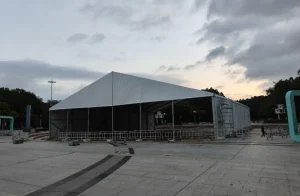
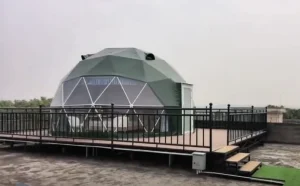
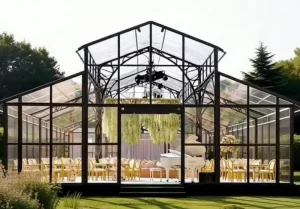
GALAXY’s tent products feature a net span ranging from 3 to 80 meters, with the flexibility of infinitely extending the length to cater to various requirements. Highly sought-after both domestically and internationally, our tent solutions stand out for their quality and versatility.
Trusted Tent Manufacturer



 English
 Spanish
 Arabic


